
Description
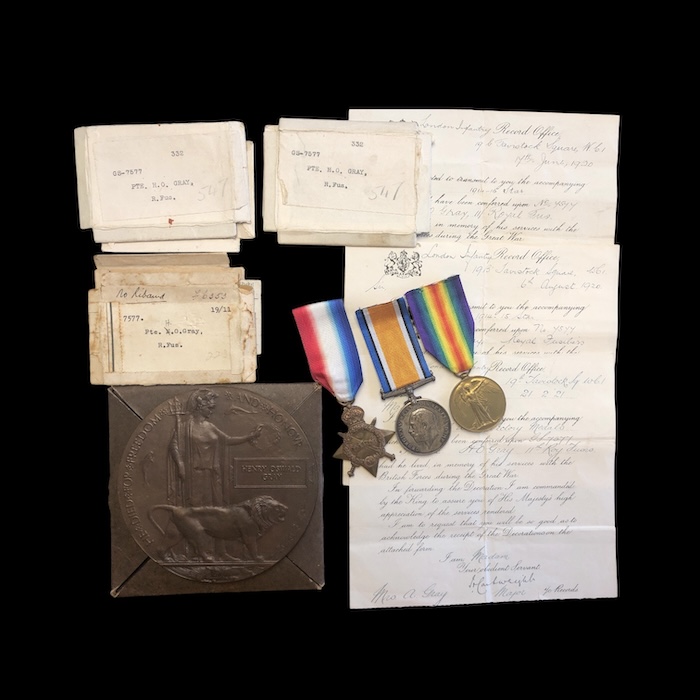
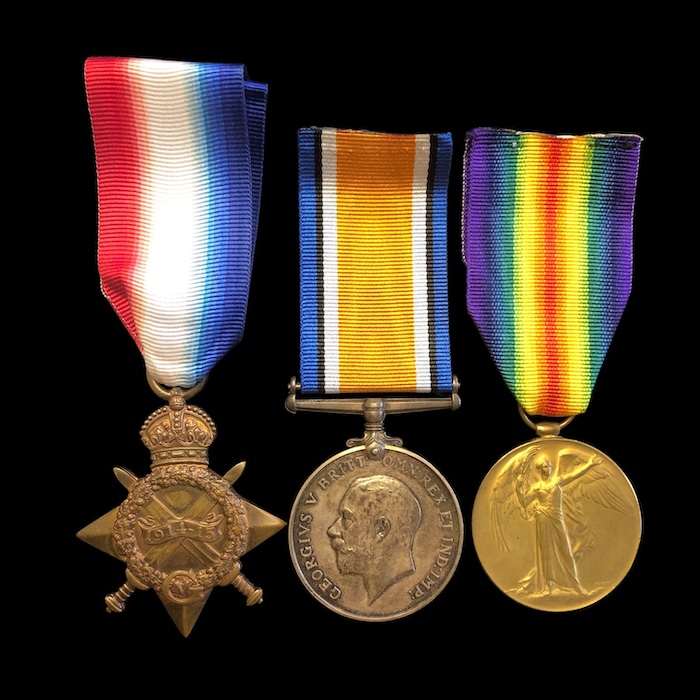
1914-15 trio, 11th battalion Royal Fusiliers (Killed in Action 3rd May 1917 (Battle of the Scarpe, Arras offensive)
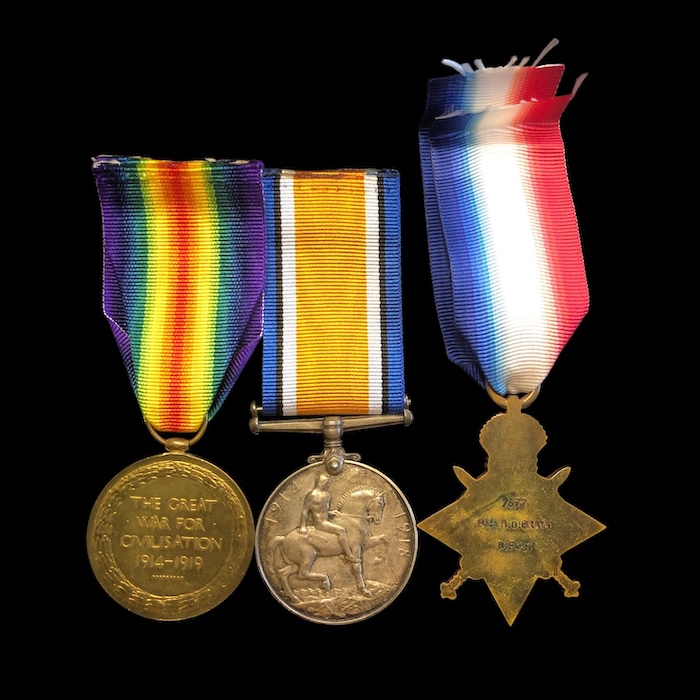
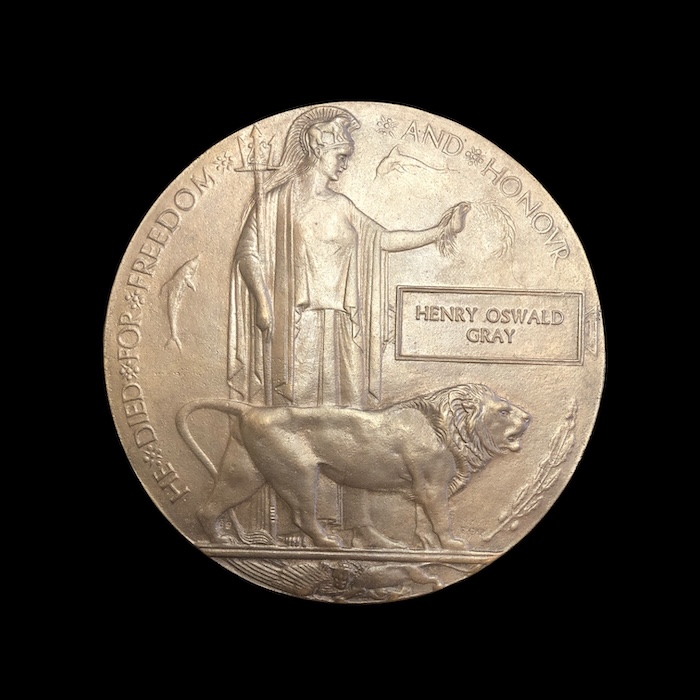
1914-15 Star, 7577 Pte H.O. Gray, R.Fus (initial H officially corrected); British War and Victory medals, GS-7577Pte H.O. Gray. R.Fus.; Memorial Plaque, Henry Oswald Gray; Card box of issues for medals and plaque, along with issue slips
Henry Oswald Gray is confirmed as landing in France on the 26th July 1915.
Killed in Action on 3rd May 1917 whilst serving in B company, 11th battalion Royal Fusiliers.
He is commemorated at the Arras memorial.
He was the son of Clifford and Alice Gray of Waggon Lane, Tottenham, London.
Condition – GVF
The Battle of Arras had begun in April with spectacular successes, but by early May, the fighting had devolved into a brutal grind. The 11th Royal Fusiliers were tasked with an objective that became notorious in the history of the 18th Division: the capture of the village of Chérisy.
The attack was scheduled for 3:45 AM on May 3rd. The conditions were catastrophic for a coordinated assault. It was pitch black, and the battlefield was shrouded in a dense, choking smog of dust and smoke from the artillery barrage. As the Fusiliers climbed out of their assembly trenches, visibility was practically zero.
The Attack The battalion advanced into the gloom, but the darkness caused immediate chaos. Companies lost contact with one another almost instantly. Despite the confusion, elements of the 11th Royal Fusiliers displayed remarkable grit, pushing through the German defensive barrage and managing to penetrate the village of Chérisy itself.
However, the success was a trap. The German defense in this sector was deep and elastic. As the Fusiliers fought through the ruins, they found themselves isolated. The units on their flanks had been held up or had lost their way in the dark, leaving the 11th exposed.
The Counter-Attack As dawn broke, the German army launched ferocious counter-attacks. Cut off from support and low on ammunition, the Fusiliers in the advanced positions were hammered by machine-gun fire from the uncaptured ground on their flanks. The situation in Chérisy became untenable. The surviving men were forced to fight a desperate withdrawal back to their starting lines, under withering fire the entire way.
The Aftermath The attack on Chérisy was a bloody failure for the British Army, and the 11th Royal Fusiliers paid a heavy price. The battalion suffered severe casualties, with hundreds of men killed, wounded, or missing in the confusion of the village fighting. May 3rd, 1917
NOTE: Sorry we cannot accept payment by PayPal for this item, We can accept payment by Credit / Debit Card, Bank Transfer or Cheque.


