
Description
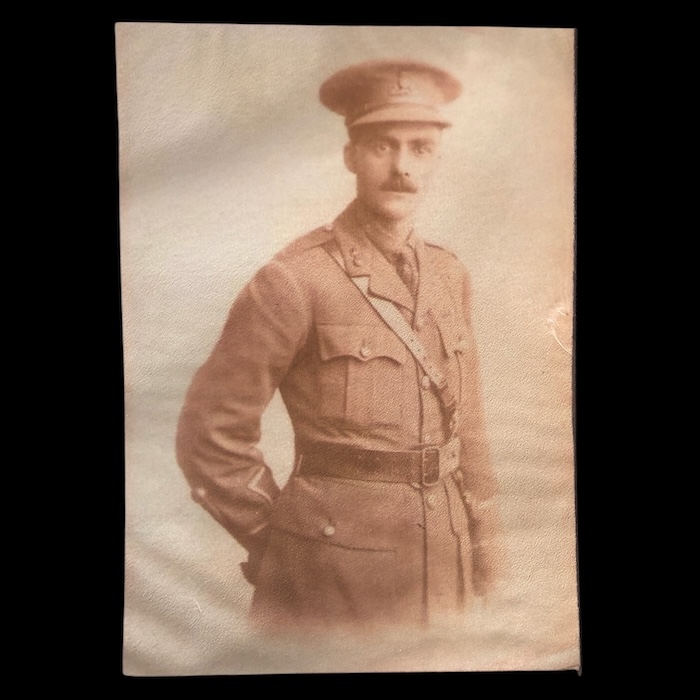
A Good Bedfordshire Regiment group who rose through the ranks, and was an Officer Casualty (2/8th Lancashire Fusiliers), Killed in Action – Poelcapelle October 1917. (3rd Ypres)
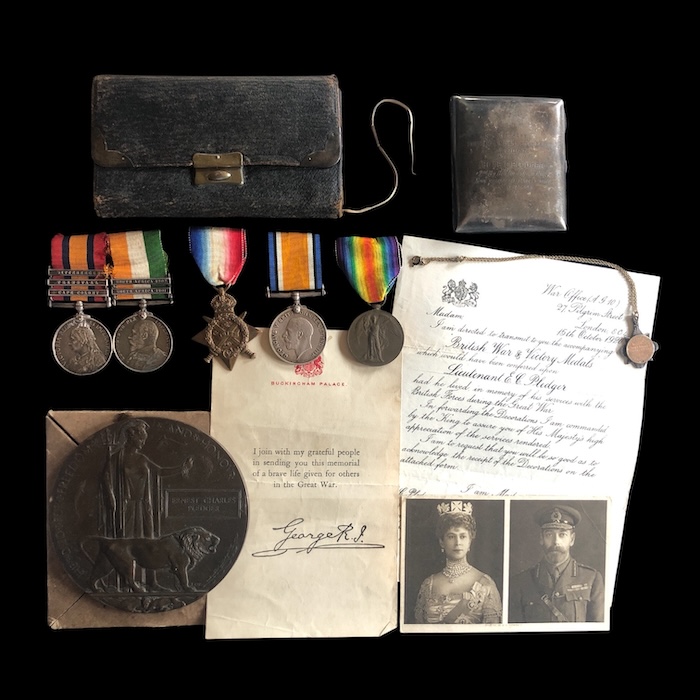
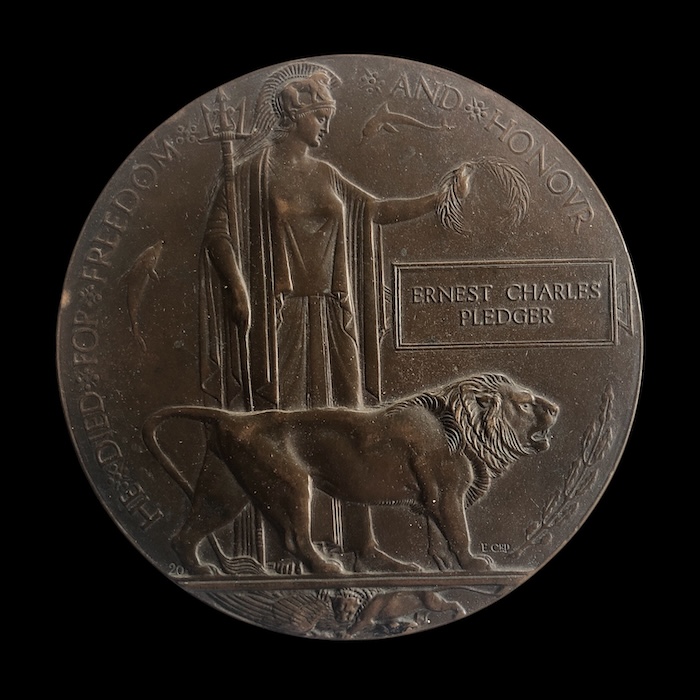
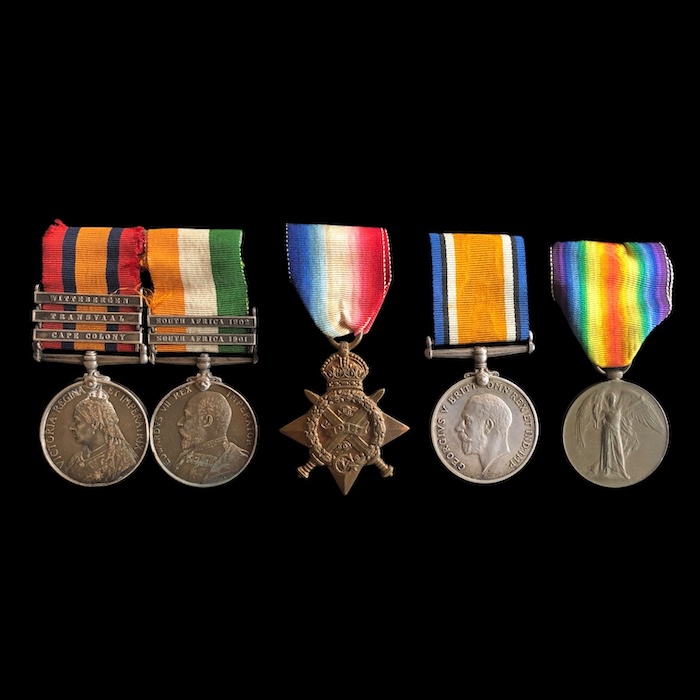
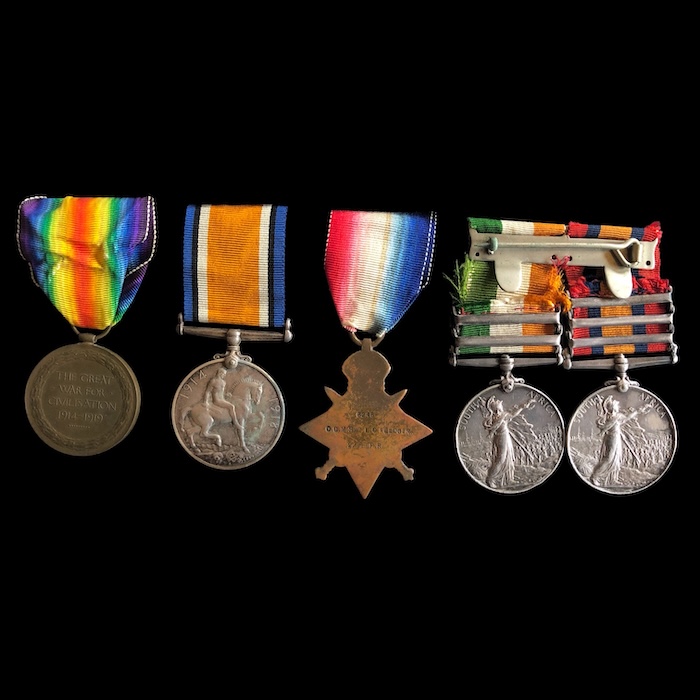
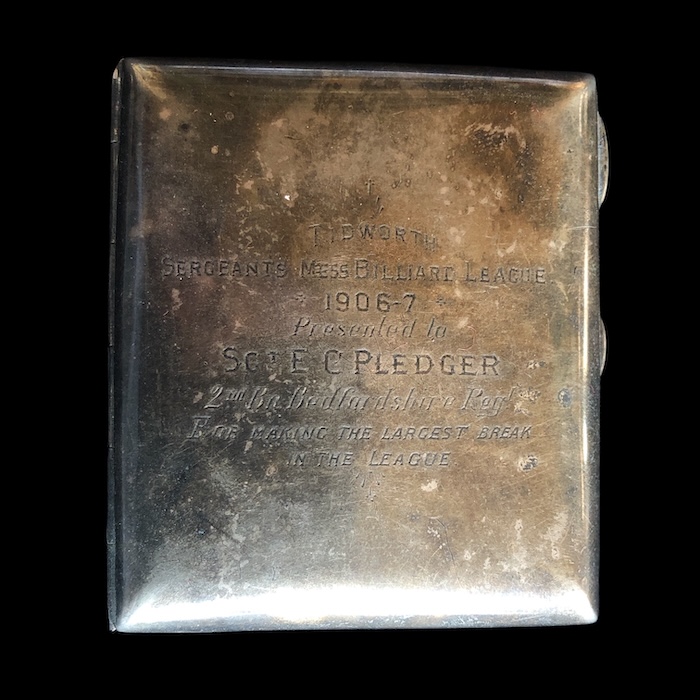
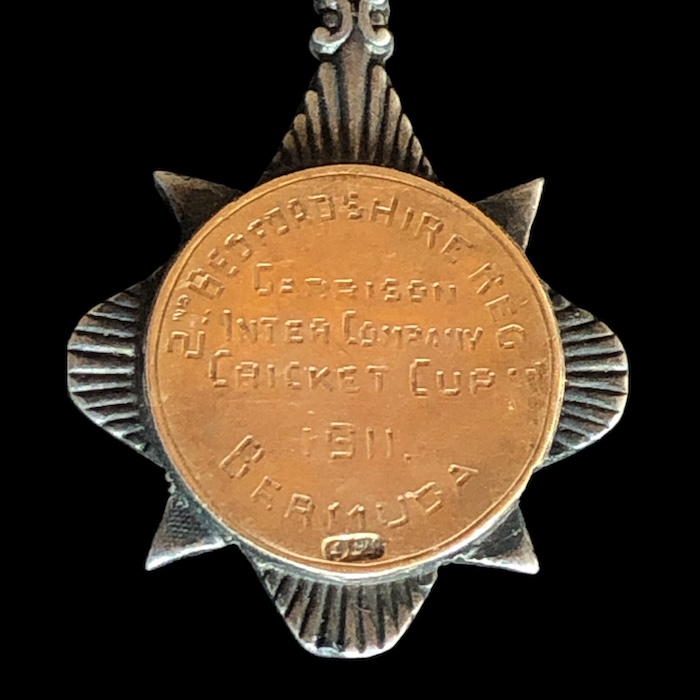
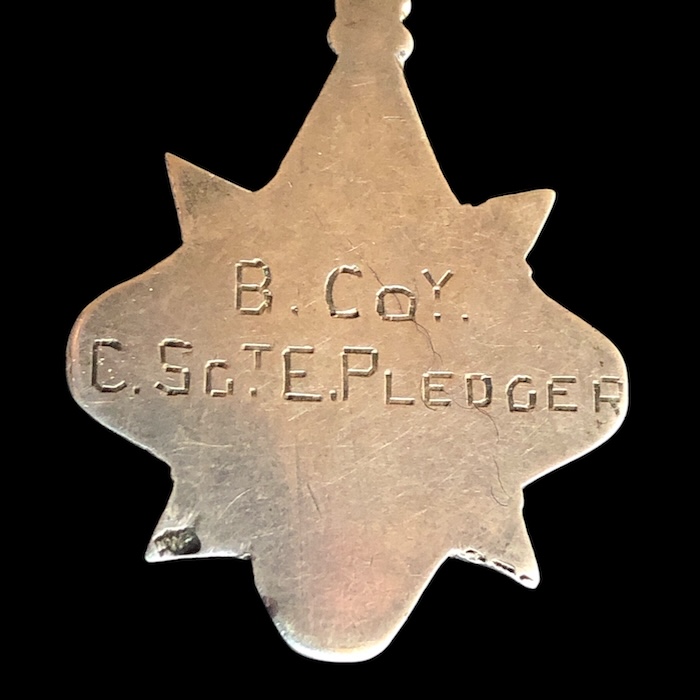
Queens South Africa, clasps, Cape Colony, Transvaal, Wittebergen, 6246 Pte E. Pledger . Bedford Regt.; Kings South Africa, clasps, South Africa 1901, South Africa 1902, 6246 Corpl C. Pledger Bedford, Regt.; 1914 Star, 6246 Q.M.Sjt E.C. Pledger 2/Bedf.R.; British War and Victory Medals, Lieut E.C> Pledger.; Memorial Plaque, Ernest Charles Pledger (with its card box and issue slip) ; Silver cigarette case, engraved, “Tidworth, Sergeants Mess Billiard League. 1906-7 Presented to Sgt E.C. Pledger 2nd BnBedfordshire Regt For Making The Largest Break in the League.”; Silver and gold plated fob, engraved ” 2nd Bedfordshire Regt, Garrison Inter Company Cricket Cup. 1911, Bermuda” and to reverse” B Coy C.Sgt E. Pledger.”; Leather bound pocket note book Named to inside, Lieutenant E.C. Pledger 16th Lancs Fus.
Killed in Action 10th October 1917
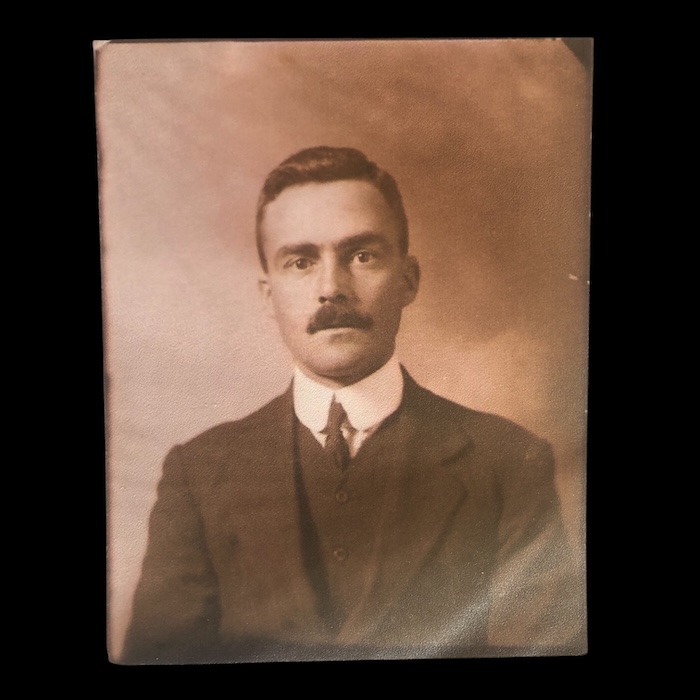
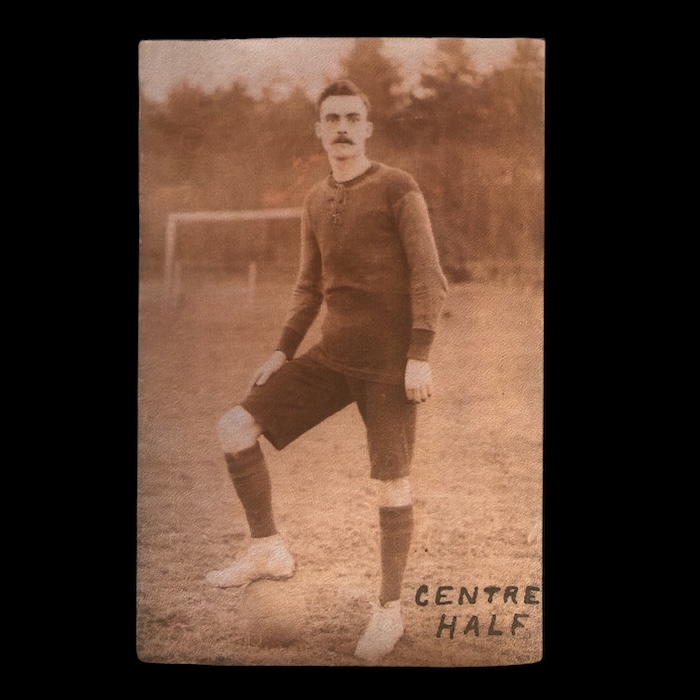
with a good file of research, which includes various photocopied photographs of E C Pledger and other family members.
Ernest Charles Pledger was born 15th January 1881 in Catmere End, Saffron Walden.
He joined the Bedfordshire Regiment on the 12*April 1898. He was 18 years and 2 months old and had been a Firewood Dealer before enlisting. and served throughout the South African Wars of 1899-1902 as well as in England, Ireland, Gibraltar, Bermuda and again in South Africa,
He was posted to the Regimental Depot two days later as Private 6246, where he underwent his basic training. On the 7th July he was posted into the 2nd battalion in Dublin, in which unit he would remain throughout his active service in the Regiment.
- On the 16** December 1899 Ernest sailed to South Africa with the battalion, where he served throughout the South African Wars of 1899 to 1902. On the 8** November he was promoted to Lance Corporal and to Corporal on the 1 August 1902.
- Between April 1903 and August 1907 Corporal Pledger served at home. In April 1903 he arrived at Colchester and moved between Bordon Camp, Colchester and Tidworth. He was promoted to Lance Sergeant on the 13th February 1905 and to Sergeant on the 4* January 1907. A few weeks before the battalion left home shores again, Ernest married Annie Benham, who went abroad with him and had their children whilst serving in Gibraltar and South Africa.
- The 29th August 1907 saw Ernest sail for Gibraltar with the battalion, where he remained until the 6th January 1910.
The 2nd Battalion, Bedfordshire Regiment deployed to South Africa in January 1900 during the Second Boer War (1899–1902), serving continuously through both the main offensive and the long guerrilla phase.
Colesberg Operations (Feb 1900): Operating with the 12th Brigade near Sliegersfontein and Colesberg, the battalion faced fierce early fighting. During an attack on British outposts on February 12, the unit suffered heavy casualties, including the death of its commanding officer, Lt. Col. Coningham.
Advance on Pretoria (May–June 1900): The battalion formed two Mounted Infantry companies to support Lord Roberts’ northern push. Bedfordshire units were among the first British troops across the Vaal River into the Transvaal and the first to reach the outskirts of Pretoria.
Guerrilla Operations (1900–1901): Operating under General Clements in the Orange Free State, the battalion engaged mobile Boer commandos, contributing to actions at Slabberts Nek and the capture of Boer General Olivier.
Blockhouse & Escort Duties (1901–1902): In the campaign’s final phase, the battalion garrisoned strategic blockhouse lines, escorted supply convoys, and conducted column sweeps.
Reinforced throughout by Volunteer Companies from the Hertfordshire Regiment, the 2nd Bedfords remained in South Africa until peace was signed in May 1902.
The 7th January 1910 the troop ship Braemar Castle move the battalion to foreign shores again and between January 1910 and January 1912 Ernest was stationed in Bermuda, after which the battalion went back to South Africa. On the 4* January 1907 he was promoted to Sergeant and the 9th August 1911 saw his rise to Colour Sergeant. The 28th February 1914 saw Ernest promoted again to Company Quarter-Master Sergeant, which saw him in charge of the Company stores and equipment, in which rank he remained throughout his service in the battalion. They remained in Pretoria, South Africa until war broke out in August 1914, at which time the battalion was recalled and sent to the battlefields of Europe.
When war broke out he was a Company Quartermaster Sergeant and arrived in France with the 2nd Battalion to serve in the ‘Immortal’ 7″ Division who suffered almost 90% casualties in their first three weeks of the war.
The 6th October 1914 saw Ernest and the 2nd battalion land in France, where he served until becoming ill in March 1915. We can say he was ill rather than being wounded as his record carries no mention of wounds received or scars resulting from an injury. Given the details on his record and the fact that they are almost always complete, it is reasonable to assume Ernest succumbed to illness, as did thousands of his fellow Old Contemptibles during the first winter in the trenches.
Ernest survived the horrendous losses suffered during the First Battle of Ypres and the dreadful first winter in the trenches around Fleurbaix before illness removed him from the line in March 1915. He spent until December recovering and returned to the 2nd Battalion again, where he served until April 1916, as they held the lines around Maricourt, next to the River Somme.
In March Ernest was promoted in the field to a Second Lieutenant and moved into the Lancashire Fusiliers. He arrived in his new battalion around the 8*h April 1916 and stayed with them in the trenches opposite Thieval. In June he injured his leg and was posted back to England where he spent many months in hospital recovering.
As the Somme offensives of 1916 raged, Ernest recovered in London and later Hull, before being declared fit for active service again in January 1917. He was posted into the 2°°/8t* battalion of the Lancashire Fusiliers, where he served on the Western Front until his death at the Battle of Poelcapelle in October 1917.
Having arrived with his new battalion sometime after February 1917 as they were mobilised for active service, Ernest served on the Belgian coast that summer, which gave them a quiet introduction to the war. The battalion were called into the Third Battle of Ypres that October for their baptism of fire, as they attacked German positions north of Zonnebeke, near Ypres, and within sight of his first battle three years to the month before.
Ernest’s battalion attacked early on the gth October 1917 in atrocious conditions, against a well prepared defensive line, through a ‘sea of glutinous mud. Nevertheless, they reached their first objective and held it against all counter attacks, despite close to 400 Officers and men. It was probably during this assault on the 9 October that Ernest fell. He was the only Officer reported wounded and missing that day and was never seen again, along with thousands upon thousands of his comrades who were missing that day.
The 2/8th Battalion, Lancashire Fusiliers—part of the 197th Brigade, 66th (2nd East Lancashire) Division—embarked for France in February 1917. After years of home-service duties, 1917 marked the battalion’s combat deployment to the Western Front.
Deployment & Initial Service (Spring 1917) – Arriving in France in late winter, the battalion underwent trench acclimation in northern France before moving into active front-line rotations.
Flanders Coast (Summer 1917) – In June 1917, the 2/8th redeployed to the Belgian coast in the Nieuport sector. Holding forward trenches along the River Yser under persistent German shellfire, they maintained defensive positions while preparing for a planned coastal amphibious offensive (Operation Hush).
Third Battle of Ypres (Autumn 1917) – Transferred to the Ypres Salient in late September, the battalion entered the Third Battle of Ypres (Passchendaele). On October 9, 1917, the unit took part in the Battle of Poelcappelle. Advancing through mud, torrential rain, and concentrated machine-gun fire from German pillboxes, the battalion suffered severe casualties while attempting to push toward Passchendaele Ridge.
Condition – GVF
With a good file of research.
NOTE: Sorry we cannot accept payment by PayPal for this item, We can accept payment by Credit / Debit Card, Bank Transfer or Cheque.


