











Description
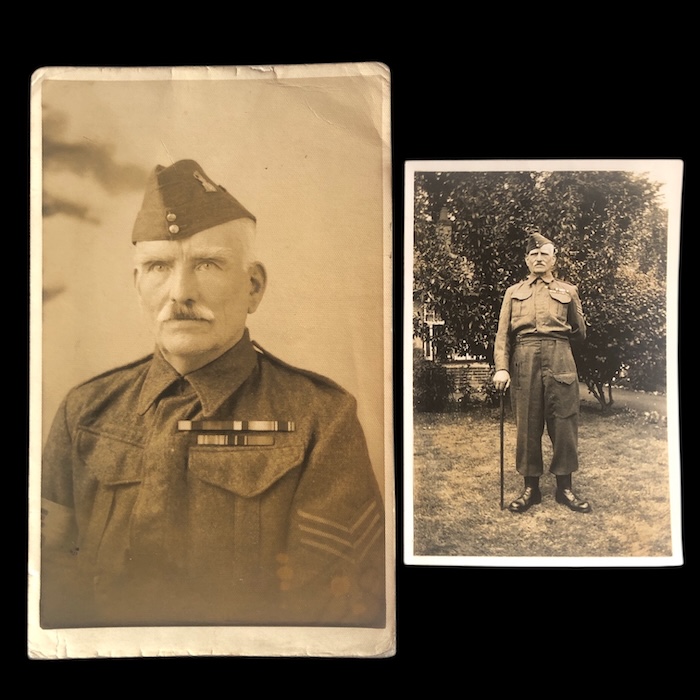
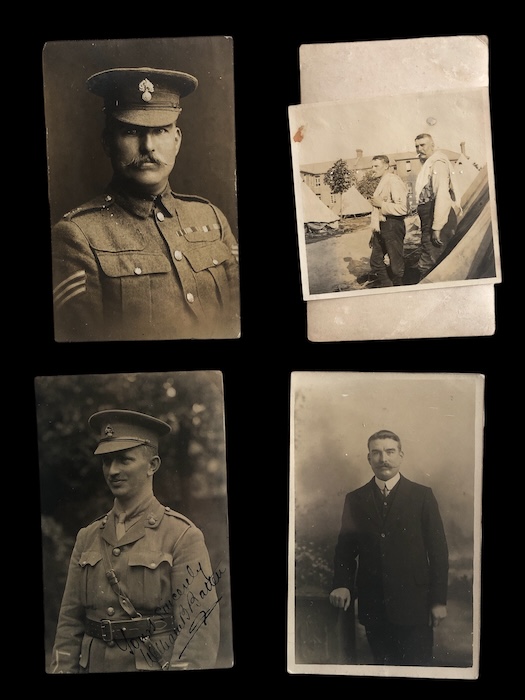
A Superb and Interesting Sudan group, Lancashire Fusiliers, Royal Fusiliers, Metropolitan Police (Royal and Diplomatic Protection) with his final service being with the home guard during WW2, almost a real example of Corporal Jones from Dads army (Just look at the photos !!)
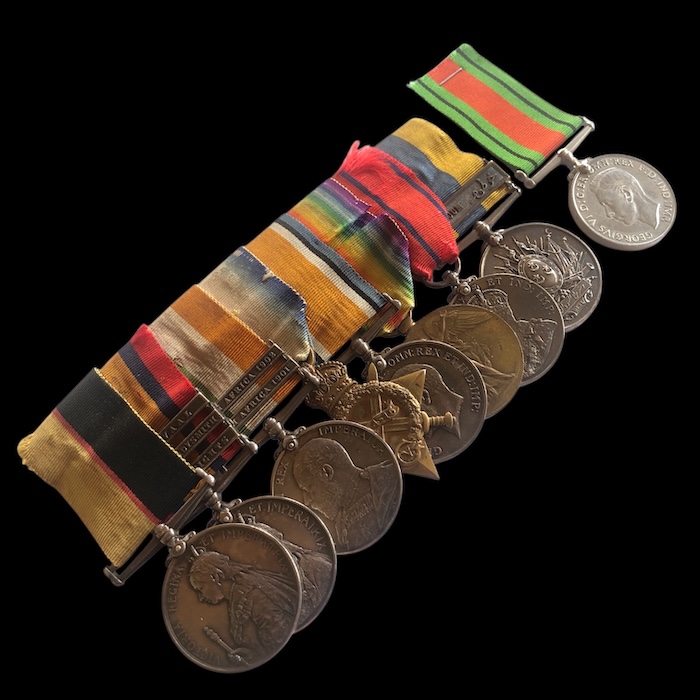
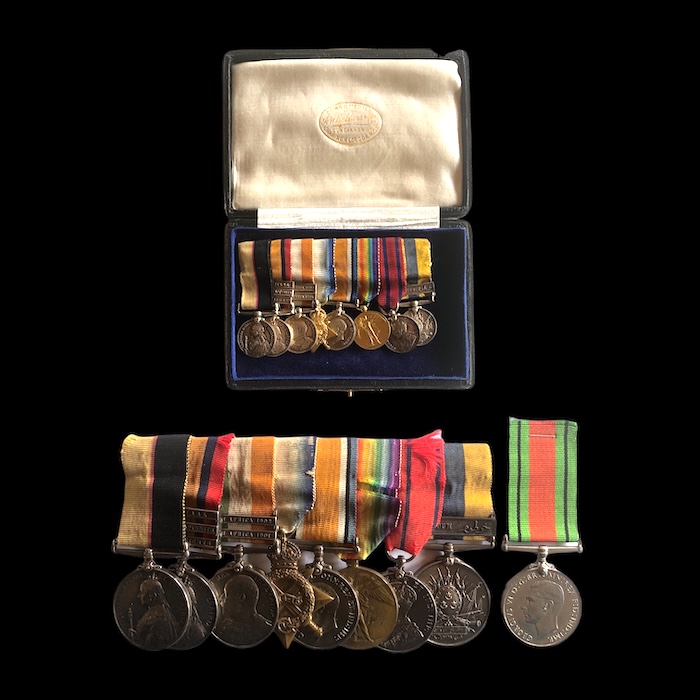
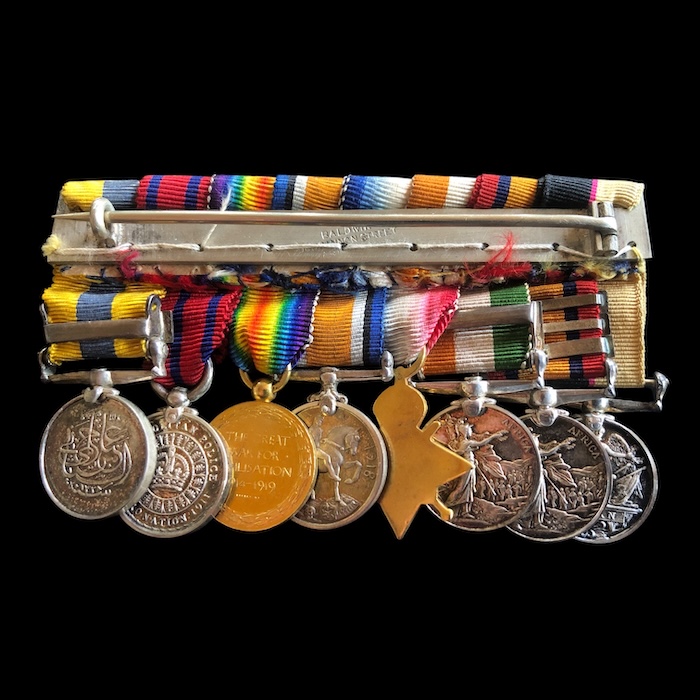
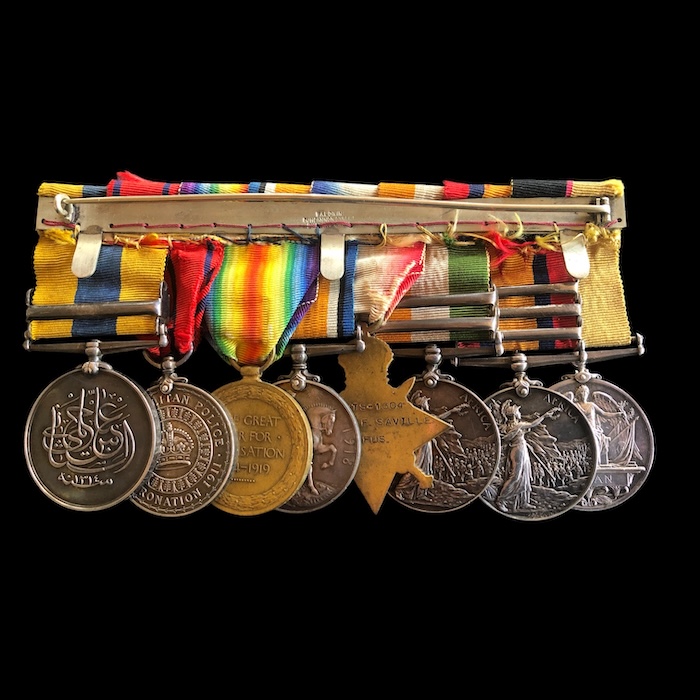
Queens Sudan, 3383 Pte W. Saville, 2/Lan. Fus.; Queens South Africa, clasps, Tugela Heights, Relief of Ladysmith, Transvaal, 5382 Drmr J. Saville. Lanc. Fus.; Kings South Africa, South Africa 1901, South Africa 1902, 5383 Dmr J. Saville Lanc. Fus.; 1914-15 Star, SPTS-1304 Sjt W.F.Saville R. Fus.; British War and Victory Medals, SPTS-1304 Sjt W.F. Saville. R. Fus.; Coronation 1911 (Met Police Silver issue) PC. W. Saville.; Khedives Sudan, clasp, Khartoum5383 Pte W. Saville, 2nd. L.F.; Defence Medal. (First 8 swing mounted as worn)
NOTE: Sorry we cannot accept payment by PayPal for this item, We can accept payment by Credit / Debit Card, Bank Transfer or Cheque.
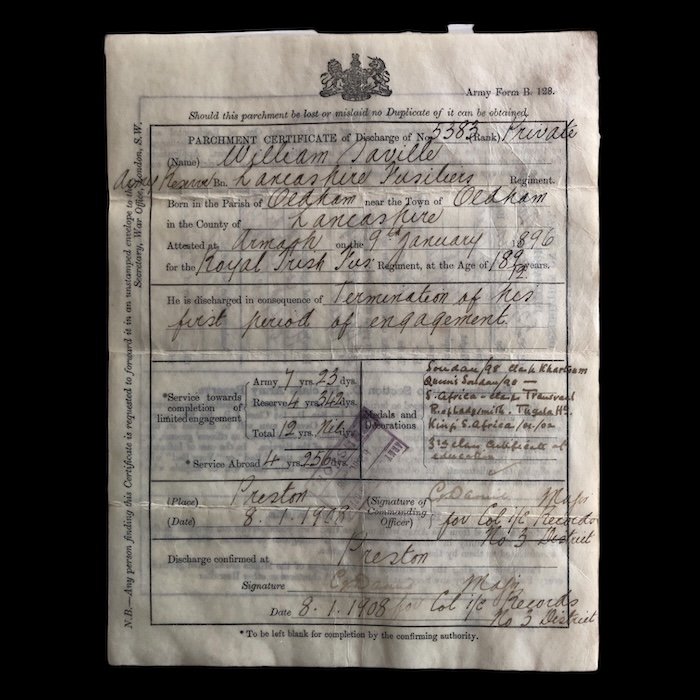
William Saville was born in Oldham In 7. He joined the army as a young soldier in 1896, entering the Royal Irish Fusiliers in Armagh, but quickly transferring into the Lancashire Fusiliers – perhaps a more obvious billet for a Lancashire weaver! Little could he have known in 1896 that he would still be doing military service nearly 50 years later, in 1944 – via 25 years in the Metropolitan Police – and that in the meantime he would pass through two colonial campaigns of some size and two World Wars.
He ended up, like Jonesy’ in Dad’s Army, with a chestful of medals, serving in his local Home Guard.
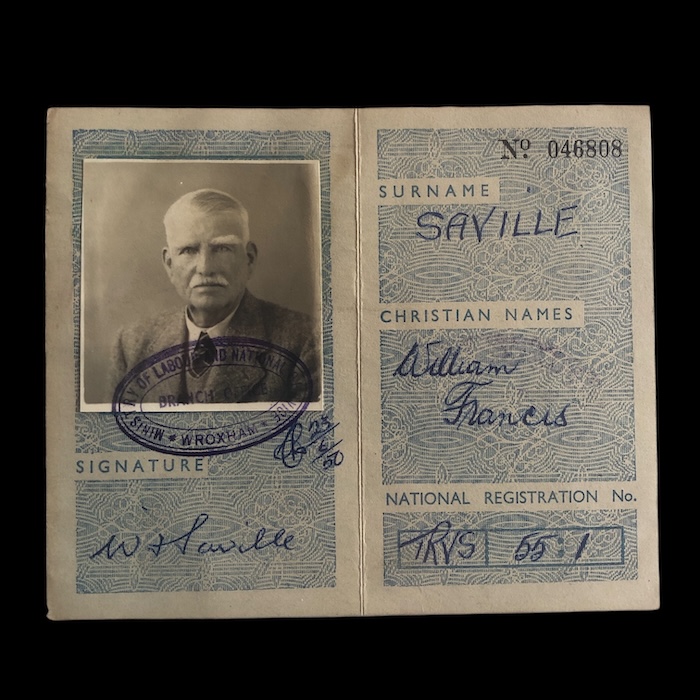
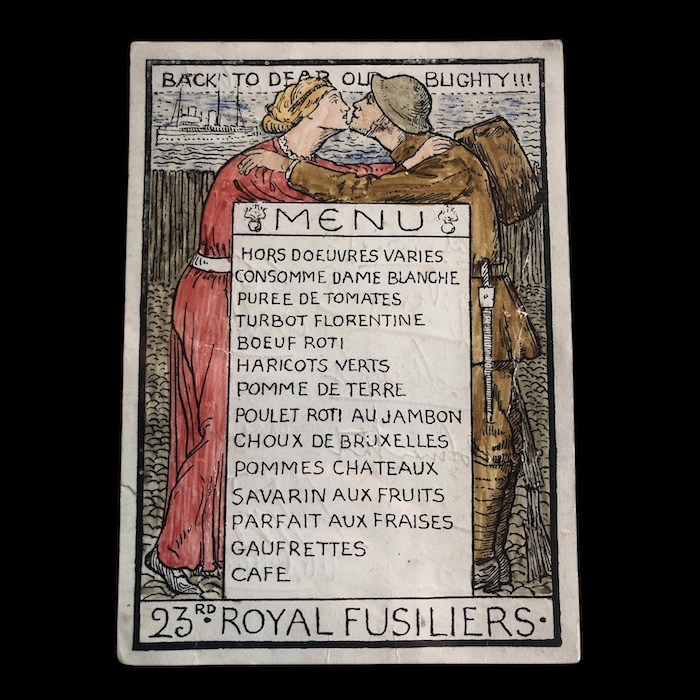
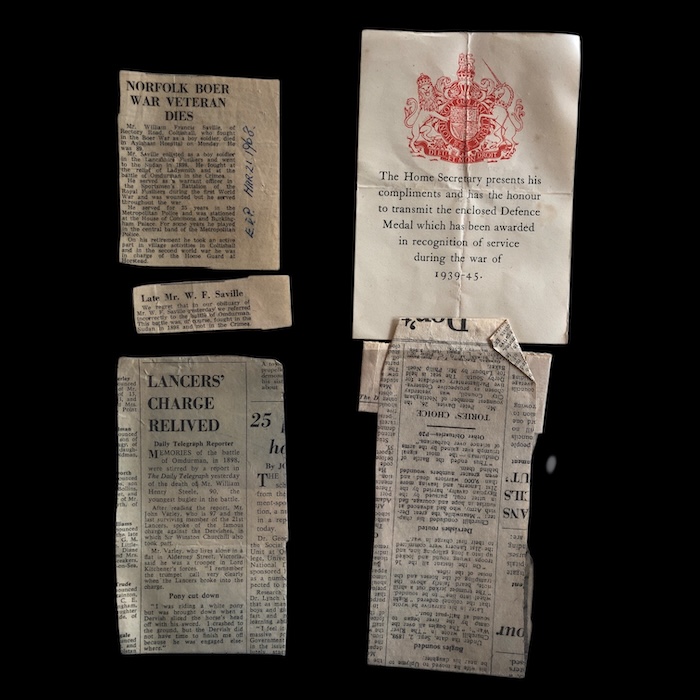
In addition to the survival of his medals and the miniature group that he wore probably more often than the full-size versions) he left behind him a fairly comprehensive and interesting archive of photographs and ephemera, documenting a very full and varied military career.
Having joined up in 1896, Saville saw his first action in 1898, serving as a Drummer with the 2nd Lancs Fusiliers in the Sudan during Kitchener’s ‘allied reconquest and being present with them in the great and decisive battle of Omdurman in September 1898.
The battalion served in General Lyttleton’s 2nd Brigade and sustained only six men wounded during the battle – fairly typical of the British regiments engaged, which inflicted huge numbers of casualties on the Dervish army but suffered little themselves. Many years later, he collected press cuttings which referred to the last survivors of the Sudan campaign, including, of course, Sir Winston Churchill, who, having ridden in the famous charge of the 21st Lancers at Omdurman, lived until 1965 and is often considered to have been the last survivor of the charge. However, other survivors feature in Saville’s cuttings. One of these was RSM William Henry Steele (who was referred to as the youngest bugler in the battle), and was also claimed to be the last survivor of the 21st Lancers’ charge; he died as late as January 1969, aged 90. But when his death was announced, a John Varley, aged 97, then claimed to be the actual last survivor of the charge. Both are indeed on the medal roll for the 21st Lancers in the Sudan and both outlived Sir Winston! Were there any others after that date?
From the Sudan, where heat and sand were the main enemies of the Lancs Fusiliers, Saville’s service took him to decidedly more dangerous action in General Buller’s Natal campaign of 1899-1900 during the Boer War, where his regiment served through the difficult operations for the ‘relief of Ladysmith’ including the disastrous action at Spion Kop in January 1900. His battalion suffered over 300 casualties in that action alone (and over 550, including those captured, during the whole campaign). The 2nd Battalion was later joined “in the field’ by men of the 3rd, 4th, 5th and 6th Battalions – some regimental commitment! – but Saville seems to have escaped unscathed and served through the Boer War and its ‘guerrilla war’ phase until its conclusion in 1902, when he returned to England.
Saville came out of the army in 1903, simply “time expired’ rather than through illness or any sense of disillusionment, and immediately joined the Metropolitan Police, a police career being quite a well-known option for ex-soldiers.
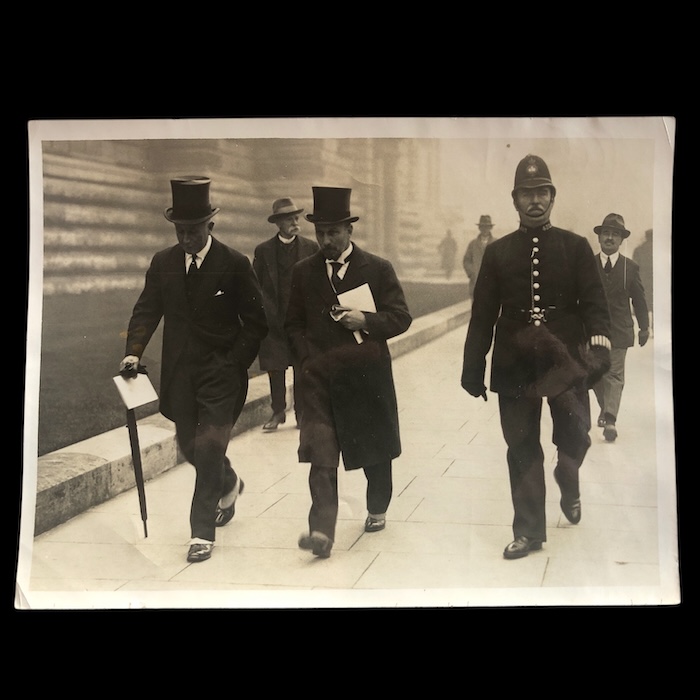
He was to serve in the Met, except for 1914-18 duty, for 25 years and during that time played in the Central Band and was part of the rather special A’ Division, which was the Royal and Diplomatic Protection branch. This saw him serving at Buckingham Palace, the Home and Foreign Offices and the House of Commons and rubbing shoulders – if only on official duties – with some important characters at important functions. He was, for example, on duty with the Protection Branch during the Imperial Conference in 1921, where he escorted various colonial dignitaries, like W. Monroe, PM of Newfoundland, and at the laying to rest of “The Unknown Soldier’ in Westminster Abbey.
With the outbreak of war in August 1914, Saville immediately rejoined the Colours, aged 36, and though initially posted to the 5th Royal Fusiliers was quickly transferred, as an experienced NCO, to the new 23rd (1st Sportsman’s) Battalion of the Royal Fusiliers on its formation in September 1914. This was one of the interesting ‘specialist’ battalions of the City of London Regiment, effectively Pals’ Battalion, but designed to encourage men from similar walks of life to join together, rather than recruiting from a small or specific area. They included battalions drawn from artists, bankers, stockbrokers, former public schools students and others. In the 23rd there were many who had made their name in sports such as cricket, boxing and football or the media. The first Sportsmen’s battalion accepted men up to the age of 45 and was formed at the Hotel Cecil in The Strand in September 1914 by Mrs E Cunliffe-Owen after she gained the permission of Lord Kitchener to try to raise a battalion for the ‘New Armies’. From November 1914 until June 1915, battalion training took place at a purpose-built camp in Hornchurch, Essex (where Saville was sent in December) and in June 1915 it was attached to the 99th Brigade of the 33rd Division. It landed at Boulogne in November 1915 and on 25 November was transferred with its Brigade into the 2nd Division. Little is recorded of Saville’s personal service ‘in France and Flanders’ – his official papers do not seem to have survived – but the 23rd RF had a distinguished record and saw some arduous service on the Western Front, including involvement in major campaigns, like the later stages of the Battle of the Somme in 1916 (at Delville Wood), Arras and ‘3rd Ypres’ in 1917, the German Spring Offensive in March 1918 and the final battles of the Hindenburg Line. Wounded in the leg in action in France in March 1918 (at the age of 40), during the Kaiser’s ‘last fling’ on the Western Front, Saville was sent to the UK for treatment at St Barts in London and then discharged on account of wounds; after recuperation he eventually returned to his career in the Metropolitan Police.
After a total of 25 years’ service with the Met, Saville retired in 1928 at the age of 50 and went to live in the village of Coltishall in Norfolk, where he seems to have taken a full part in village and local life, for example, with the local veterans associations. It was not surprising that, on the outbreak of another world war in 1939, Saville should immediately join his Local Defence Volunteers and eventually commanded the Horstead Home Guard company, which was part of the 5th East Norfolk HG, being discharged in July 1943 on age grounds, then being 65 years old. William Saville died in Coltishall just a few days short of his 90th birthday in March 1968 – another very late survivor of Omdurman and the Sudan campaign – and is buried in Coltishall churchyard.


