

Description
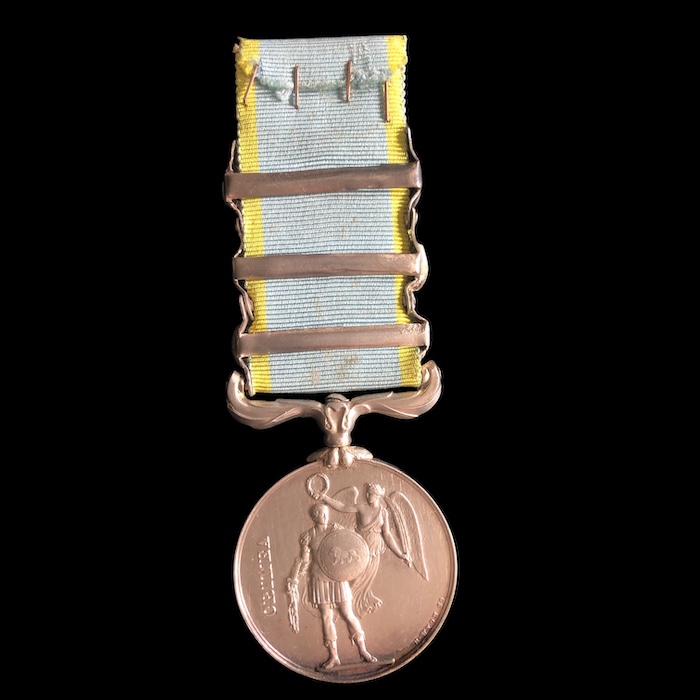
Crimea Casualty, Killed in Action The Quarries 6th November 1854 – 50th Regiment.
Crimea, clasps, Alma, Inkermann, Sebastopol, R. Nagle. 50th Regt. (Officially Impressed)
Clasps correct on rolls, and casualty confirmed in the published list as “3726 Nagle Richard, Killed 2nd December 1854” Sebastopol.
Copy of medal roll
The 50th (Queen’s Own) Regiment of Foot played a pivotal role in the Crimean War during 1854, establishing a reputation for resolute tenacity during the early months of the campaign. Arriving in the Crimea in September 1854 as part of the 3rd Division, the regiment earned early distinction at the Battle of the Alma before being thrust into the siege operations around Sevastopol.
On November 5, 1854, at the Battle of Inkerman, the 50th Foot, commanded by Lieutenant-Colonel Richard Waddy, delivered a crucial bayonet countercharge against dense Russian columns. Driving the enemy back down the slopes, the regiment stabilized a vital sector of the battlefield.
Immediately following Inkerman, the conflict descended into a punishing siege. Throughout November 1854, the 50th was assigned to the exposed forward trenches and advanced picket posts of the Left Attack, directly opposite the Russian strongpoints. Key among these positions were the local stone quarries and rifle pits, which held strategic military value for both sides as key vantage points controlling the approaches to the fortress.
Life in the quarries during November was defined by extreme hardship and frequent close-quarters combat. Russian troops launched relentless night sorties, taking advantage of cold rain, heavy fog, and dark terrain to surprise the British outposts and attempt to recapture the quarry workings. The 50th Regiment engaged in fierce hand-to-hand fighting to defend these positions, holding off repeated Russian raids with bayonets and musket fire when ammunition ran low.
Despite suffering heavy casualties from enemy fire, disease, and severe winter conditions, the 50th held the quarries firm. Their stubborn defense throughout November 1854 ensured that the Allied siege lines remained intact during one of the most precarious phases of the Crimean campaign.
Condition – GVF, surface scratches


