
Description
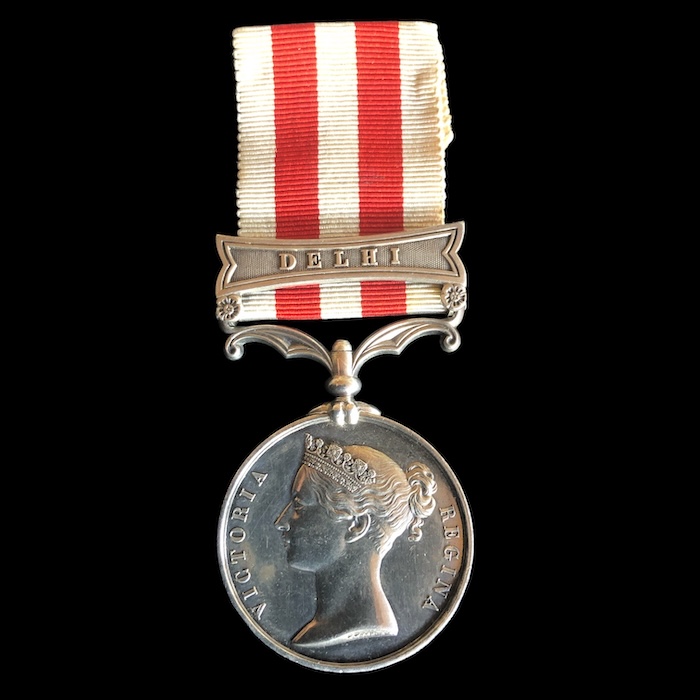
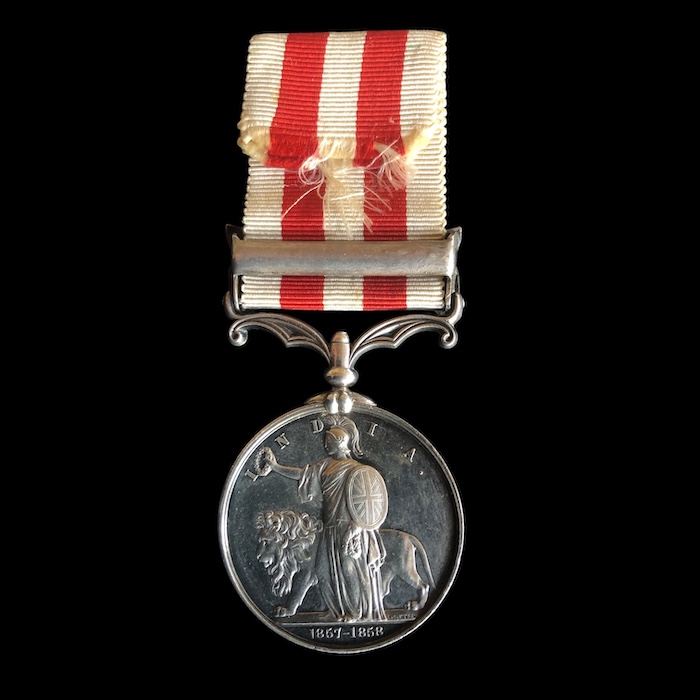
Indian Mutiny, clasp, Delhi, 1/60th Rifles , Severely Wounded Delhi, later died of the wounds.
Indian Mutiny, clasp, Delhi, J. Thompson. 1st Bn 60th Rifles.
3270 John Thompson is correct on the medal roll with clasp Delhi, and is recorded as having died of wounds on the 16th September 1857, having been wounded in action on the 14th during the assault on Delhi.
Another J. Thompson in the regiment received the Indian Mutiny Medal, clasp Delhi, this man also won the Victoria Cross and his medals are held by the Royal Green Jackets Museum
At the outbreak of the Indian Mutiny in May 1857, the 1st Battalion of the 60th Regiment of Foot (The King’s Royal Rifle Corps) was stationed at Meerut, where the rebellion famously ignited. Equipped with advanced Enfield rifles and trained in modern skirmishing tactics, the battalion formed a vital component of the meager European forces available to stem the initial tide of the insurrection. Following the chaotic events at Meerut, the 60th Rifles joined the field force under Archdale Wilson, marching toward Delhi. Along the route, they played a decisive role in engagements such as the battles of the Hindun River on May 30th and 31st, successfully repelling rebel attacks, securing critical infrastructure, and helping to stabilize the panic-stricken northern territories.
On June 7th, 1857, the battalion linked up with the main besieging army on the strategic Ridge overlooking Delhi. For more than three grueling months, the 1st Battalion endured relentless counterattacks, stifling heat, torrential monsoons, and devastating outbreaks of disease. Operating predominantly as elite skirmishers, the riflemen were continually deployed to contest the rugged terrain of the Subzi Mundi (the suburbs and walled gardens surrounding the Ridge), where daily outposts and sharp skirmishes exhausted both sides. Despite being heavily outnumbered by disciplined mutineer regiments who had turned British military training against them, the men of the 60th Rifles held the British right flank with unyielding tenacity. Their precision fire kept enemy artillery crews at bay and blunted numerous massed sorties, cementing their reputation as an indispensable backbone of the field force throughout the arduous siege.
Actions During the Assault on Delhi (14th September 1857)
The culmination of the siege arrived on September 14th, 1857, with the grand assault on the walled city of Delhi. The 1st Battalion of the 60th Rifles played a pioneering and hazardous role in spearheading the attack. Detachments totaling roughly 200 riflemen were selected to precede the main assaulting columns as advanced skirmishers. Moving ahead of the infantry and engineering parties, their primary objective was to suppress deadly enemy musketry from the ramparts, pick off gunners defending the fortifications, and clear the immediate area of defenders to allow the breaching and storming parties to approach the heavily fortified walls.
As the heavy siege guns completed their bombardment, the columns rushed forward under a ferocious storm of fire. The 60th Rifles skirmished aggressively around the Kashmiri Gate and surrounding bastions, providing vital suppressing cover while the legendary explosive party advanced to blow open the gate. Once the breaches were forced and the columns—including the 1st and 3rd assault columns—poured into the city, the riflemen transitioned into close-quarters urban combat. They fought street-by-street, clearing heavily barricaded houses, courtyards, and rooftops against entrenched resistance. The fighting was intensely bloody; the battalion suffered severe casualties over the course of the storming and subsequent days of clearing operations. Nevertheless, the aggressive initiative and accurate fire discipline displayed by the 60th Rifles on September 14th proved instrumental in securing a permanent foothold inside Delhi, ultimately turning the tide of the campaign and breaking the back of the rebellion.
Condition – GVF


