
Description
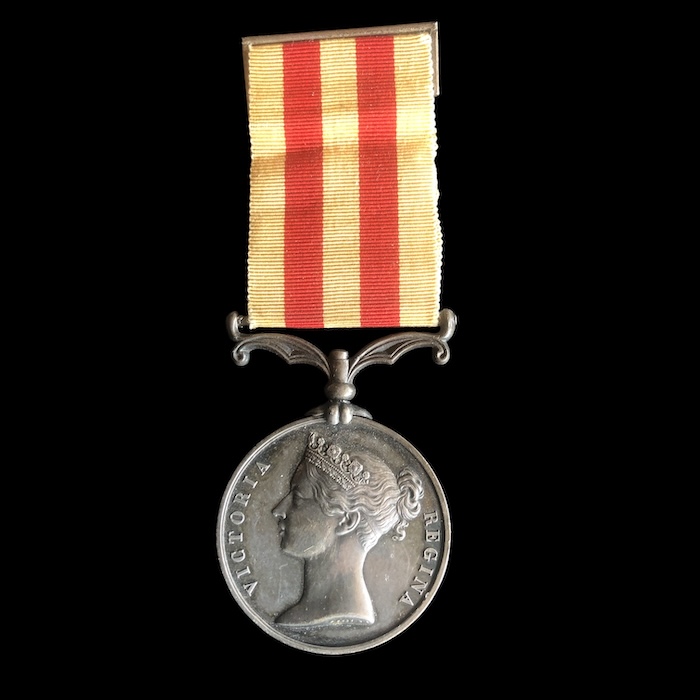
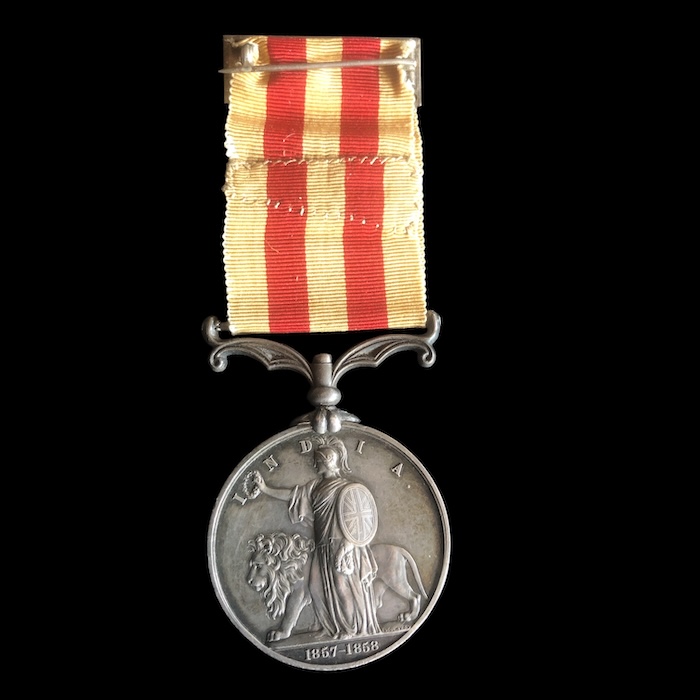
Indian Mutiny medal – 1st battalion 20th Regiment. (East Devonshire)
Indian Mutiny medal, no clasp, Wm Butler, 1st Bn 20th Regt.; On an old wearing pin.
Correct on medal roll, with service no 4554.
The 1st Battalion of the 20th (East Devonshire) Regiment of Foot entered the Indian Mutiny not as part of the initial garrison caught in the uprising, but as a critical component of the massive British reinforcement effort sent to reclaim the subcontinent.
Arriving in India in late 1857, the 1st Battalion was quickly thrust into the heart of the rebellion: the province of Oudh (Awadh). Under the command of Colonel Fredrick Evelegh, the battalion joined the force led by Brigadier-General Franks, which was tasked with clearing rebel strongholds on the road to Lucknow.
The regiment’s first major test came at the Battle of Sultanpore in February 1858. Here, the 20th displayed the disciplined line-fire that was the hallmark of the British infantry, helping to rout a numerically superior rebel force and capturing their artillery. This victory cleared the path for the final, decisive operation of the war.
In March 1858, the 1st Battalion took its place in the final assault on Lucknow under Sir Colin Campbell. Unlike the desperate defensive “Relief” of the previous year, this was a systematic, brutal offensive.
The 20th served in the 4th Division and was heavily involved in the street-by-street fighting that characterized the city’s fall. They were part of the forces that stormed the Kaiserbagh, the King of Oudh’s palace complex. The fighting was chaotic and claustrophobic, moving through fortified gardens and labyrinthine corridors. The battalion earned high praise for its steadiness under fire, ultimately helping to break the back of the organized resistance in the city.
Butler is not entitled to the clasp Lucknow, without his service record we cannot be sure of the reason, but he may have been sick at the time, or only arrived as a reinforcement after the action.
Following the fall of Lucknow, the war shifted from grand sieges to a grueling counter-insurgency campaign. Throughout 1858 and into 1859, the 1st Battalion marched hundreds of miles across the scorching plains of Oudh, dismantling rebel forts and pursuing leaders like Beni Madho.
The conditions were arguably more lethal than the combat:
Climate: Soldiers marched in heavy gear through temperatures exceeding 40°C.
Disease: Cholera and heatstroke claimed significantly more lives within the battalion than rebel musket balls.
By the time the battalion was finally ordered home, they had earned the battle honor “Lucknow” and established a reputation for endurance. They left behind a transformed India and a regiment thinned by two years of relentless, fever-ridden campaigning.
Condition – GVF


