
Description
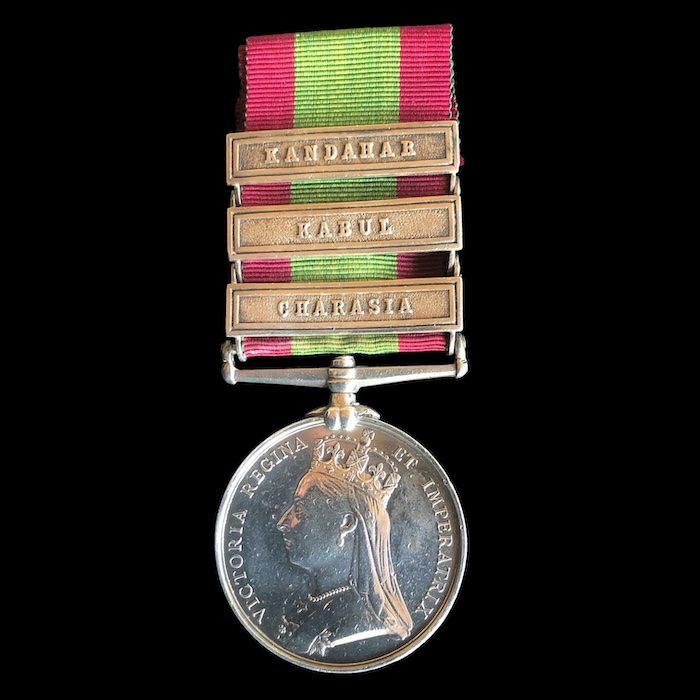
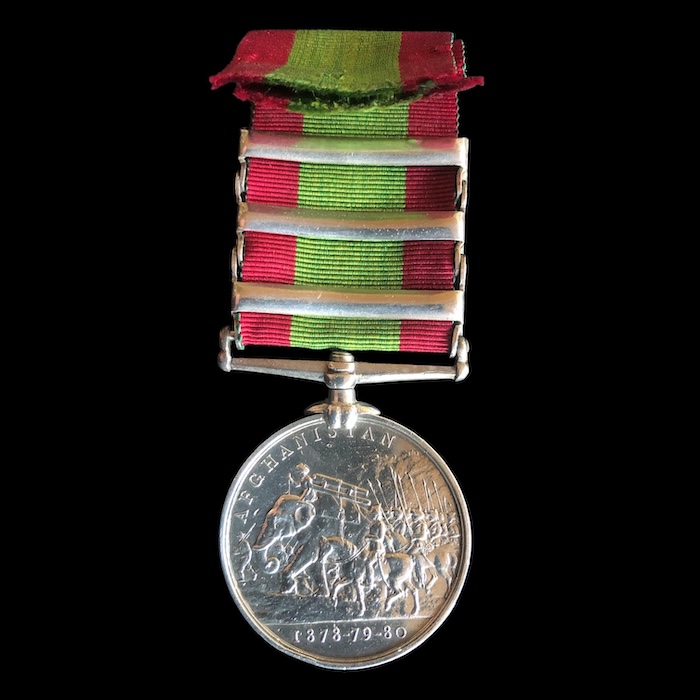
Afghanistan 1878-79-80, clasps Charasia, Kabul,Kandahar – 72nd Highlanders
Afghanistan 1878-79-80, clasps, Charasia, Kabul,Kandahar, 58-B/20, Pte E. Scott, 72nd Highrs.
Correct on medal roll for both medal and clasps, also entitled to the Kabul to Kandahar Star.
Condition – GVF, usual pitting from star
During the Second Afghan War (1878–1880), the 72nd Regiment of Foot (The Duke of Albany’s Own Highlanders) established an exceptional combat record as one of Major-General Sir Frederick Roberts’ most trusted and elite frontline units. Serving primarily within the Kurram Valley Field Force, the regiment faced punishing mountain terrain and extreme weather from the very outset of hostilities.
Their baptism of fire came at the pivotal Battle of Peiwar Kotal on December 2, 1878. Tasked with executing a daring flanking maneuver alongside the 5th Gurkhas, the 72nd Highlanders scaled the precipitous, freezing heights of the Spingawi Kotal by night. Catching the Afghan defenders completely by surprise at dawn, the Highlanders spearheaded the assault, storming heavily fortified trenches and capturing enemy artillery pieces under fierce fire. This tactical masterstroke cracked the formidable mountain barrier, forcing the Afghan army into retreat and securing a vital gateway into the country.
Following the brief Treaty of Gandamak, hostilities flared anew in September 1879 following the assassination of the British envoy Sir Louis Cavagnari in Kabul. The 72nd rapidly returned to active operations, playing a leading role at the Battle of Charasiah on October 6, 1879. Displaying characteristic tenacity, the Highlanders advanced under heavy enemy musketry to clear entrenched ridge lines, paving the way for Roberts’ triumphant entry into Kabul.
However, the occupation quickly turned perilous. In December 1879, tens of thousands of armed tribesmen rose up, trapping Roberts’ small force inside the vulnerable Sherpur Cantonment. Throughout a tense, multi-week siege, the 72nd Highlanders were constantly engaged in desperate defensive actions and counter-attacks across the rugged surrounding terrain, including the steep Asmai heights. It was during these brutal close-quarters engagements that Lance-Corporal George Sellar earned the Victoria Cross for conspicuous gallantry.
The regiment’s crowning achievement arrived in late summer 1880. Following a major British reverse at Maiwand, the 72nd joined Roberts’ legendary 300-mile forced march from Kabul to Kandahar. Arriving battle-ready, the Highlanders formed a crucial component of the assaulting infantry at the decisive Battle of Kandahar on September 1, 1880. They charged and carried the enemy’s fortified entrenchments, shattering Ayub Khan’s army and bringing a victorious close to the war. For their steadfast service, the 72nd earned battle honors for Peiwar Kotal, Charasiah, Kabul, and Kandahar.


