
Very long service, very good conduct. The remarkable career of Major Henry Pococke.
- Posted by Peter Duckers
- 0 Comment(s)
Very long service, very good conduct.
The remarkable career of Major Henry Pococke.
by Peter Duckers
When I first saw a medal group to “H. Pococke” nearly fifty years ago, it looked more like two groups than one man’s medals – too long a range of service. The group comprises:
1. Afghan War medal, 1878-80, no clasp: L.Cpl. H. Pococke, 7th Fus.
2. Queen’s South Africa, clasps Cape Colony, Orange Free State, Transvaal, South Africa 1901, South Africa 1902. – Lt. H. Pococke, Imperial Yeomanry
3. 1915 Star: Qm. and Hon. Major H Pockocke, Lovat Scouts
4. British War Medal: Major H. Pococke
5. Victory Medal with MID emblem: Major H. Pococke
6. Victorian Army LS and GC Medal: Col. Sergt. H. Pococke, Royal Fus.
7. Territorial Decoration, GeoV.
8. 1911 Coronation medal.

An initial thought was that this was a father-and-son grouping – the Afghan Medal and LSGC to one man, who became an NCO in the Royal Fusiliers, and the QSA, Coronation, Trio and TD to his son serving in the Yeomanry. However, since research is what the hobby is all about, it didn’t take long to establish that it was in fact one group to one man (Henry Pococke) and represented service between 1877 and 1920 – 43 years.
The first thing to say is that ‘Henry Pococke’ was an alias, used by Frederick Styles when he joined the army in 1877. Born in Romsey in 1858 and educated at Osborne school in the town, his reasons for a change of name are unkonwn – though not uncommon with army enlistments. At any rate, the name stayed with him, recorded in his subsequent army records and given on his death certificate. ‘Fred Styles’ never appears again.
Pococke joined the 7th Royal Fusiliers in time to serve in the Afghan War and in the defence of Kandahar; later Army Lists – in which he appears, after becoming an officer – show that he served in the disastrous engagement at Deh Khoja on 16 August 1880, when the 7th lost over 50 killed and wounded in the unsuccessful attack on a village close to Kandahar’s defences. The siege ended with Lord Roberts’ crushing defeat of the Afghan forces at the battle of Kandahar on 1 September, but since Pococke did not receive the clasp he must have been one of the 132 men of the 7th who remained on duty in the city on the day of the battle.
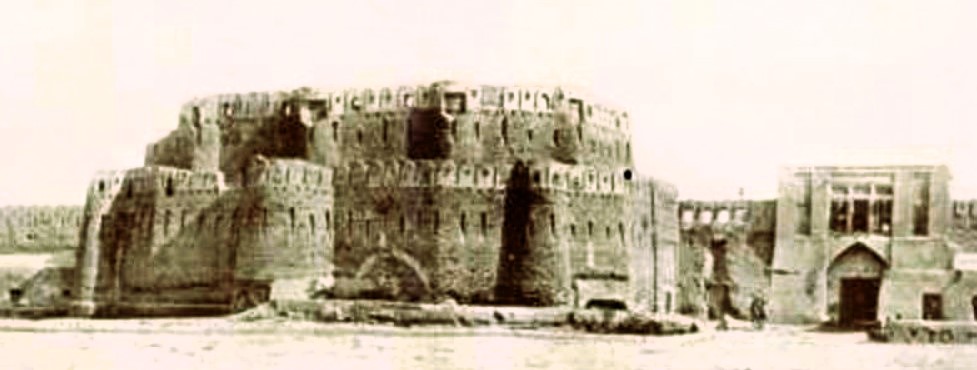
The Citadel, Kandahar, 1880 – where some of the 7th Fusiliers were based at the time of the battle of Kandahar
Pococke rose through the ranks between 1877 and 1896, reaching Quartermaster Sergeant by 1896 and his overseas’ service took him to Afghanistan, India, Gibraltar, Egypt and Malta. He transferred to the Staff of the Army in 1896 and finished his career as Camp Quartermaster Sergeant at the Curragh Camp in Ireland – an important and demanding role. He retired from the army after 22 years’ service in January 1899, then holding the Afghan Medal and the LSGC, awarded in 1896.
During 1899 and 1900, Pococke worked in the East End of London as a clerk for Messrs. Greese in Shadwell. Perhaps it is not difficult to imagine a man like Pococke being seriously bored by his work in a back-street office after such an eventful life of travel and responsibility; he soon volunteered for service in the Boer War.
Pococke attested as a Private in the Berkshire Imperial Yeomanry on 22 January 1901 – an infantryman becoming cavalry! – claiming to be 35 years old, the maximum allowable age for Yeomanry volunteers, but he was actually 43 and admitted to 22 years’ previous service! Clearly, his long experience stood him in good stead and he must have proved to be an efficient Yeoman; in June 1901, he was commissioned as a Lieutenant on the Staff of the 15th Imperial Yeomanry and saw out the war with them, receiving the QSA with five clasps.

Lovat Scots camp at Beuly, 1903
Just after the end of the Boer War, Pococke received a very inusual promotion – he was appointed Quartermaster to the elite Lovat Scouts, a mounted volunteer unit which was unusual in having two regiments but only one Quartermaster between them. (“Henry Pococke to be Quartermaster and Honorary Captain . Dated 10th June, 1903″); Pococke served in this dual capacity from 1902 to 1916. He was one of a handful of officers and men of the Lovat Scouts who attended the Coronation of King George V in London in 1911 and duly received the Coronation Medal. Interestingly enough, the few photos which exist of him as an officer with the Scouts don’t show him wearing his pre-South Africa medals; he was, of course rather older than he had claimed and he might not have wanted to declare his earlier service. He claimed to have been born in 1877 – by which time he was in Afghanistan! – but pencil notes on his papers show that the authorities were unconvinced!
As QM and Major, Pococke went with the Lovat Scouts to Gallipoli in September 1915; he was wounded by shrapnel, suffered from frostbite and fell out of a bus taking him to hospital, breaking his arm! In July 1916 he was Mentioned in Dispatches by General Munro for service on Gallipoli as a Major with the Lovat Scouts.
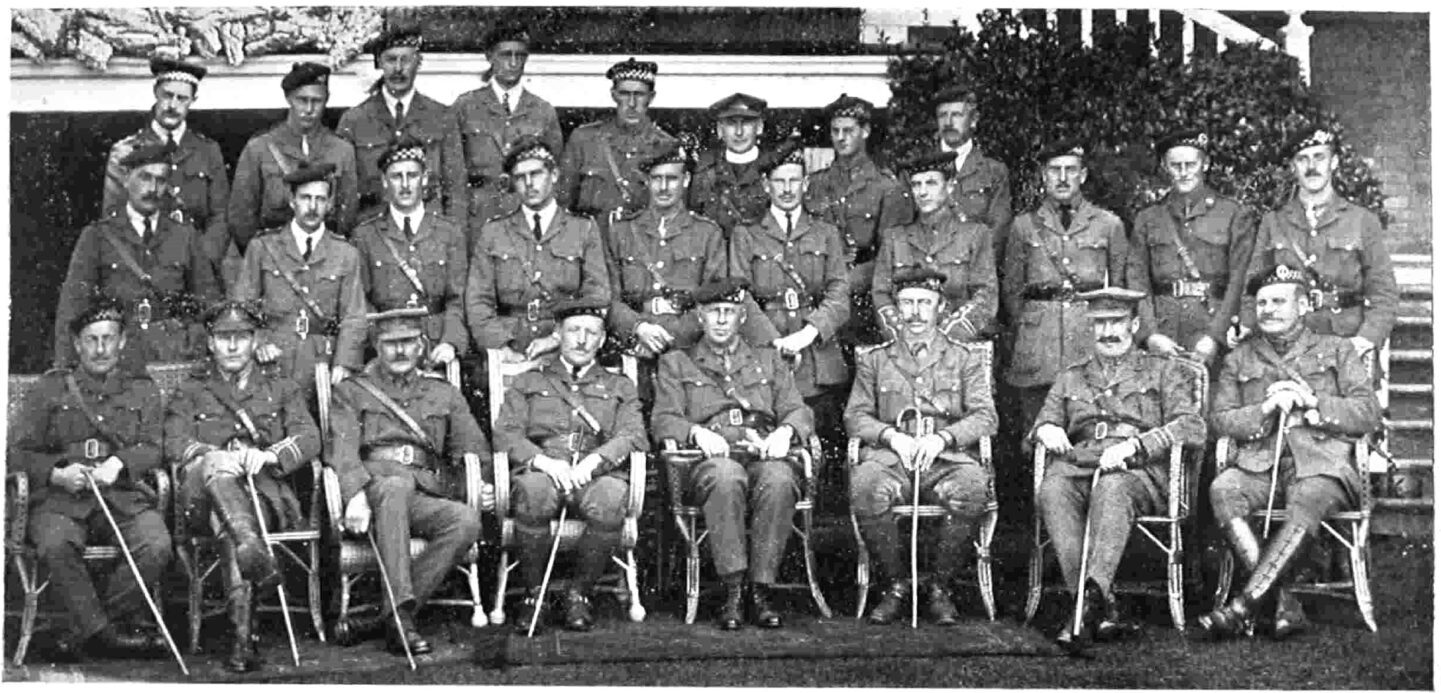
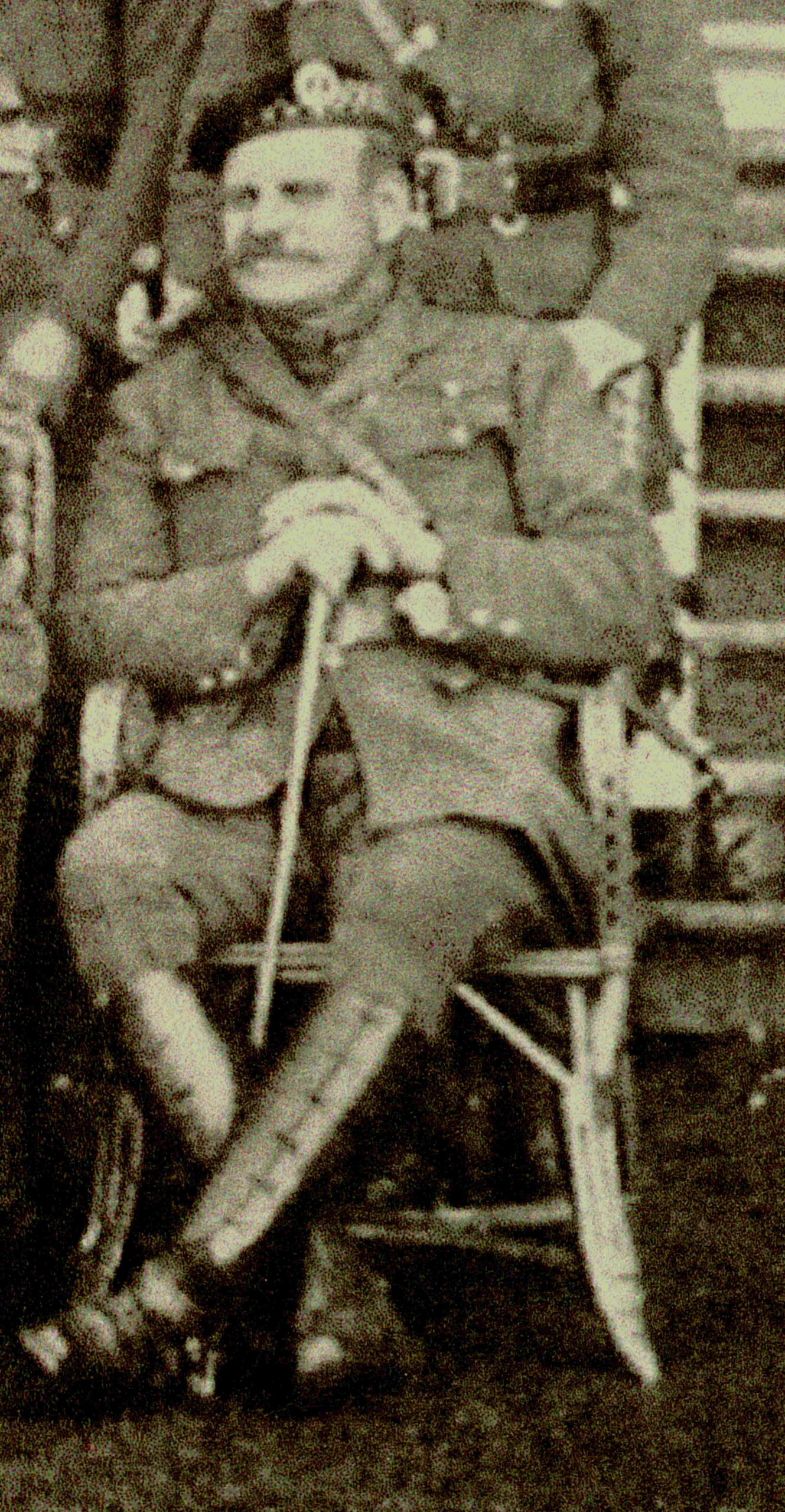
Officers of Lovat Scouts at Alford, about to embark for Gallipoli in 1915 – Pococke bottom right.
Having been sent home to recuperate, Pococke – who was 58 years of age by now – was posted for UK service in a Territorial battalion of the Suffolk Regiment. And there, one may have thought, he might have ended his army career. But in 1917 he was sent overseas again on active service, appointed Captain and then Major in, of all things, the Tank Corps. Pococke found himself, at the age of 60, commanding No. 1 Gun Carrier Company in operations near Amiens in 1918; he was with the unit in France until it was demobilised under his command in 1919. Working with tanks in France in 1918-19 must have seemed a long, long way from the defence of Kandahar in 1878!
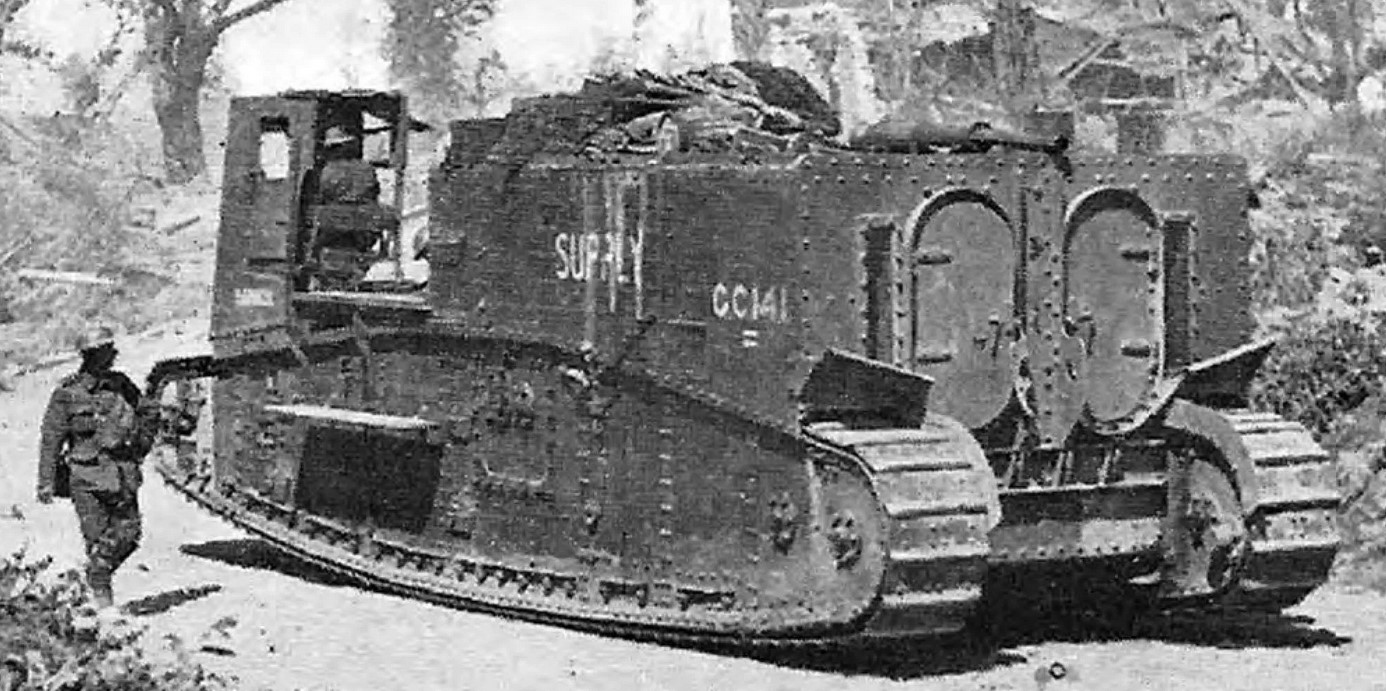
A “gun carrier” of the Tank Corps used as a supply vehicle
Pococke finally ended his army service in 1920 at the age of 62, having been posted back briefly to the Suffolk Regiment, and was awarded the Territorial Decoration in that year.
But even this is not the end of Pococke’s long and varied career. Throughout his life, certainly after the Boer War and as a Territorial Officer, he had been involved with “kinemas” and the moving film. He worked for the Provincial Theatre Company, whose ambitious aim was to set up a cinema in every major town in Britain, and with them he worked in Wednesbury and Wolverhampton as a cinema manager after the war. In 1924 he moved north – to Sheffield, Hull and Bridlington. He was instrumental in bringing the new-fangled “talkies” to a number of northern cinemas in the interwar period and perhaps deserves to be better known for this service. In fact, he only gave up managing cinemas in 1942 – his theatre, the Palace in Bridlington, was bombed in 1940 by the Luftwaffe and others he ran in Hull and Sheffield were closed down by the government on public safety grounds.
The “Bridlington Free Press”, of 6 January 1940 recorded:
“THE PALACE PICTURE HOUSE: Closing down after tonight’s performance.
After tonight’s (Saturday) performance, the Palace Picture House will close until further notice. The Palace has been a cinema since 1913 and before that was run as a theatre. At one time it was the only theatre in the town. Major H. Pococke, the manager, has been here for the last ten years. He came in 1930 to introduce sound pictures to the cinema and it was intended that he should stay seven weeks, but he met with such success that he remained and a few years later became manager of the Palace Theatre, where he introduced talking pictures. The Palace Picture House was extremely popular with many patrons and consequently they will regret that it is being closed down.”
Pococke moved briefly in 1940 to manage cinemas in Hull and Sheffield until 1942 when cinemas and theatres were closed down on safety reasons and he finally retired at the age of 84. Major Henry Pococke returned to Bridlington and spent his remaining years in quiet retirement, latterly in Priory Crescent, Bridlington, where he died in February 1950 aged 91. He is buried in the Catholic church of Our Lady and St. Peter, Bridlington. His second wife died in 1968.
“The Chronicle” (Bridlington) , Friday, February 10th, 1950.
THE LATE MAJOR POCOCKE : The death of Major Henry Pococke (91) took place on Sunday after an illness of about six weeks. Major Pococke was an old war veteran who saw nearly half a century’s service in the Army, serving in the Afghan War and the First World War, when he was a Major in the Tank Corps. He won many medals in both wars and was mentioned in despatches.”
Taken one by one, there is nothing rare or valuable amongst Pococke’s medals, but as a group his “many medals” stand as a fine testimony to a long and active career spanning Victorian campaigns as far back as the 1870s to Tank Warfare on the Western Front, in the Regular Army, in the Yeomanry and in the Teritorials. They never fail to remind me of what a privilege it is to own the medals of such men.